-By Kim Parnell-
Motor Neurone Disease (MND) was once considered rare. Many Australians had never even heard of it — until it struck their own lives or someone they knew. Today, MND Australia reports that every day in our country, two people are diagnosed, and two people die from the disease. At any given time, around 2,752 Australians are living with MND.
The lifetime risk of developing MND is approximately one in 300 by the age of 85, and this risk increases with age. Around half of all cases are diagnosed before the age of 60. Despite this, public awareness remains limited.
MND is not one single illness but a group of diseases affecting nerve cells called motor neurons — the messengers that carry signals from the brain to the muscles via the spinal cord, allowing us to walk, talk, swallow, and breathe. In MND, these neurons degenerate and die, causing muscles to weaken and waste away. The disease progresses at different speeds in different people, but on average, life expectancy after diagnosis is just two to three years. There is currently no cure.
The main medication prescribed is Riluzole, which may slightly slow progression, extending survival by a few months.
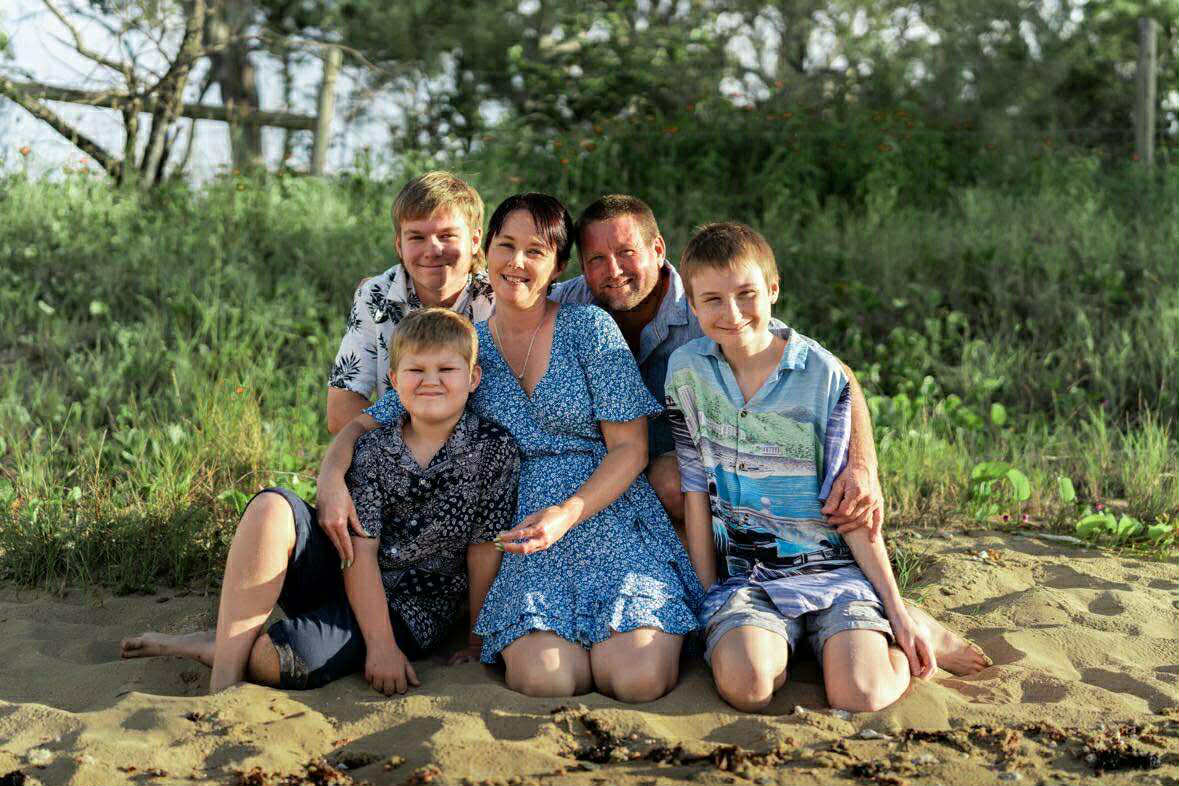
For Hervey Bay couple Jane and Damian Andrews, the statistics became personal in the cruelest way. Damian was only 42 when diagnosed.cruellest
“When you get diagnosed with this horrific disease, which doesn’t affect your mind but slowly shuts your whole body down — and you’re aware of it all — it’s devastating,” Jane says.
A fight for funding and research
Damian was put on a trial called The Lighthouse Trial, which was created in the UK but adopted in Australia. After nearly a year, the trial was scrapped. Funding ran out, and there wasn’t considered to be enough evidence to justify continuing. “Three weeks after it ended, Damian’s symptoms went downhill,” Jane recalls. “But all he could think about was how he could help others.”
The couple are now speaking out for greater government funding for MND research. “We need to figure out what’s causing it, stop it, and find a cure,” Jane says. Australian scientists are working on a promising new medication. Phase one trials had amazing results, but they can’t go to phase 2 until they get government funding.
Without further funding, phase two can’t happen. “Most money goes to Fight MND, which does incredible work with the Big Freeze, but it often falls to people living with MND to raise funds themselves,” Jane says.
The MND and Me Foundation also supports families to improve quality of life, but Jane is adamant: “Let’s find a cure. We need to back our scientists and put Australia on the map. It could be a game-changer.”
Damian’s diagnosis
Damian’s first symptom was slurred speech. An MRI revealed scarring on his brain, thought at first to be from migraines. Jane pushed for more investigation. After four months waiting to see a visiting specialist at St Stephen’s Hospital, Damian was referred to Brisbane for nerve testing.
Then came the call to return urgently. On 18 January 2024, at 5:30 p.m., they received the news no one wants to hear: “I’m going to give you the worst diagnosis I can — you have MND.”
Damian, a carpenter by trade, was told he had to stop working immediately. His son had been his apprentice for six months. “Telling them I had to quit was one of the hardest things I’ve ever done,” Damian says.
For Jane, the hardest moment was telling their children. Their youngest son, Charlie, is fully autistic. “He knows Daddy is sick but doesn’t understand he’s dying. We can’t find a child psychologist who deals with both grief and autism.”
Community strength
Damian was transferred to a Sunshine Coast neurologist passionate about MND, who got him onto the trial. But the couple were also facing financial stress. Jane’s sister started a GoFundMe page, and then the Hervey Bay community rallied. Fuel vouchers, food vouchers, handmade gifts, and Dunga Derby by Rally for a Cause helped out by paying their bills for a year, which helped lift the burden a little.
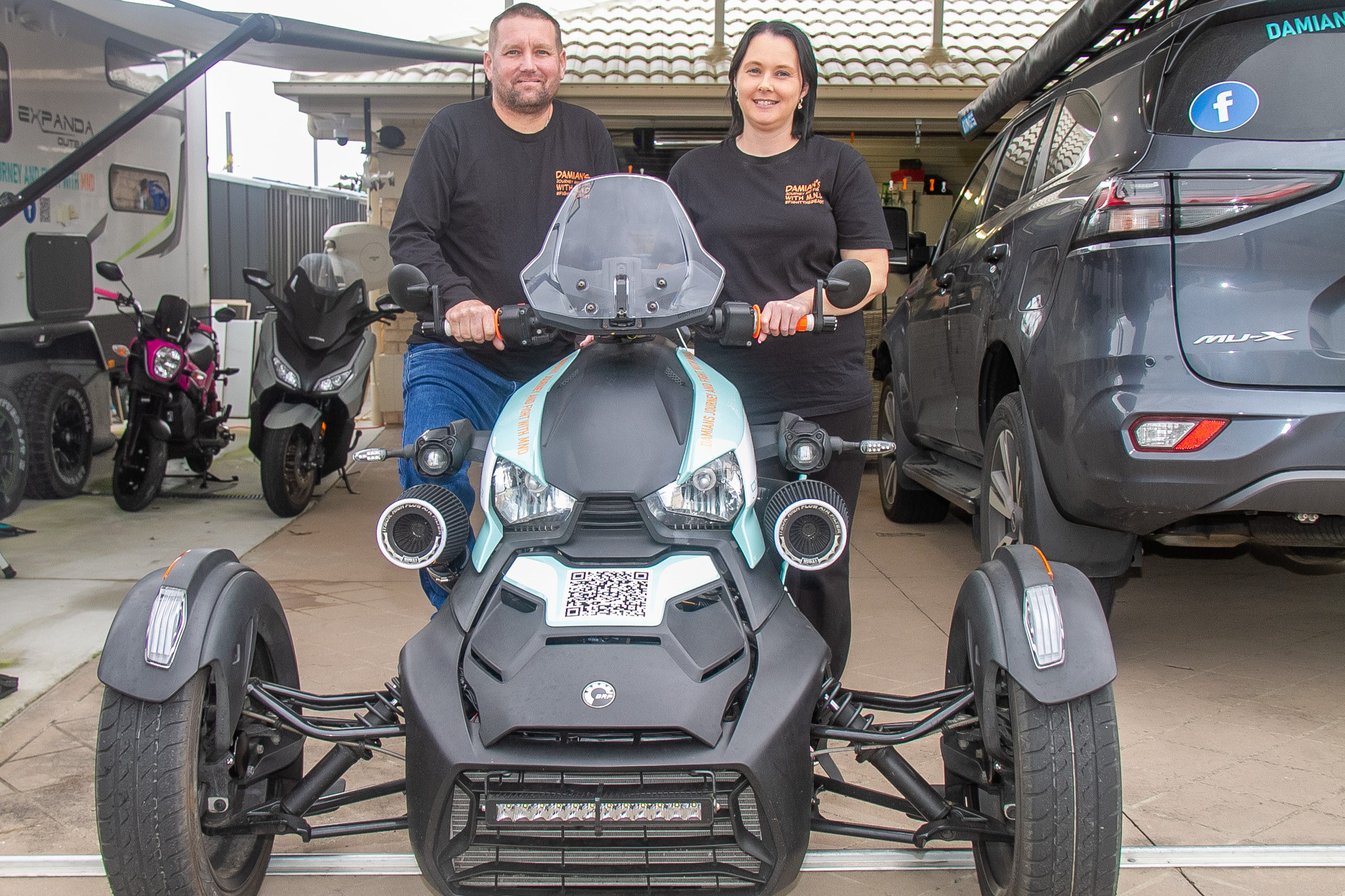
“The generosity was overwhelming,” Jane says. “Damian didn’t think saying thank you was enough. We wanted people to see how they were helping, so we started a Facebook page, Damian’s Journey and Fight with MND. We share the good, bad, and ugly — no sugar-coating. Other MND families follow it, and Damian’s attitude inspires them. We call our supporters our MND Army.”
They even created merchandise — including t-shirts featuring Damian’s pride and joy, his Can-Am Ryker three-wheeler motorbike in MND colours called Bug — with profits going to Fight MND. “The bigger the army, the more awareness we raise,” Jane says.
Damian adds, “I have two choices: sit on the couch and wait to die or make every day count. I’ve chosen the second.”
Living with Bulbar Onset ALS
Damian has Bulbar Onset Amyotrophic Lateral Sclerosis — meaning the disease began in his throat and vocal cords. This form has a shorter life expectancy, and doctors have given him 18 months to two and a half years.
His tongue muscles have weakened, making speech harder. Facial twitches, spasms, and painful neck cramps add to the challenges. Swallowing is increasingly difficult, and choking is common.
“It’s a very heartbreaking disease,” Jane says. “Damian is suffering physically, and to watch him suffer is horrific to watch.”
The couple have three children with special needs and now receive NDIS support. They’ve had to tackle wills, life insurance, and superannuation to ensure they can remain in their home.
A love built on fate
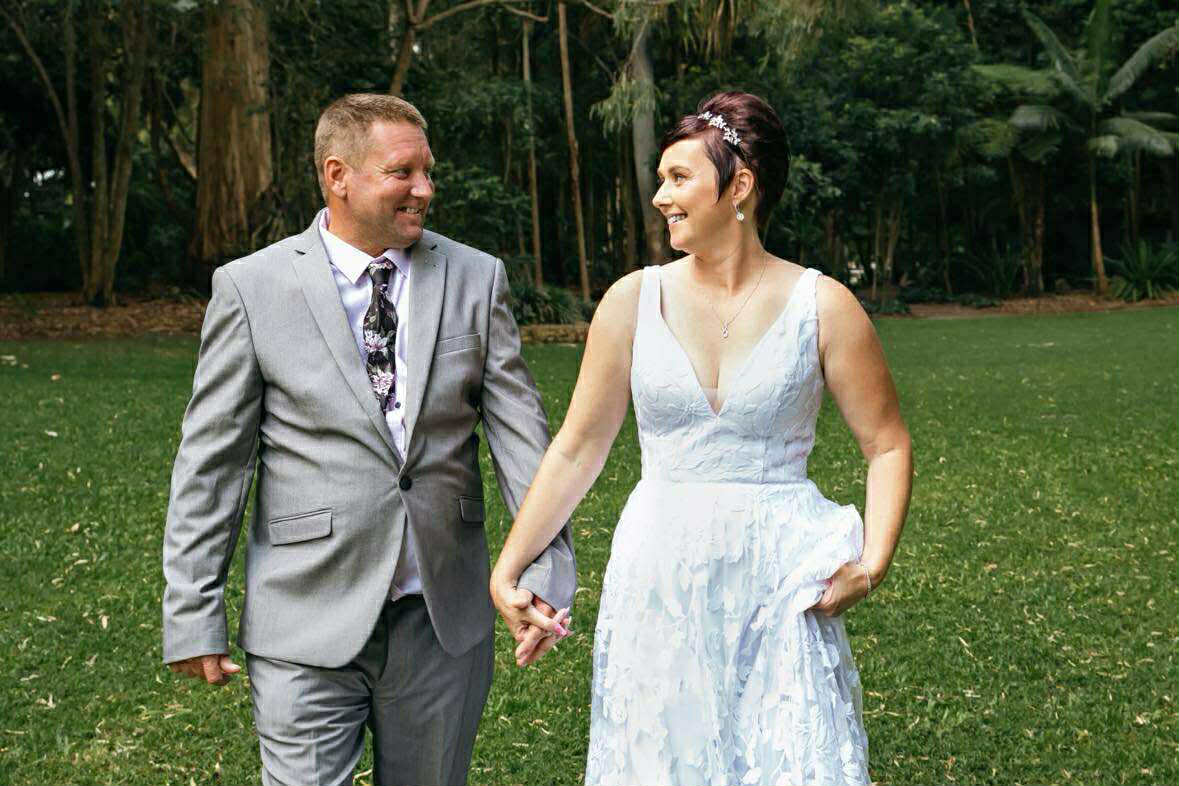
Jane and Damian’s love story spans 25 years. It began with a series of chance encounters — at a petrol station, a movie counter, and later a car event — before they finally exchanged numbers and never looked back.
Last month, they celebrated 20 years of marriage. “Damian is the most selfless person,” Jane says. “He puts us first, always. He’s an amazing dad. The kids idolise him, and so do I. He is so inspirational and just doesn’t give up.”
They share a motto: We Got This, and they each have the saying tattooed on their bodies. “Life’s thrown us obstacles, but we’ve always faced them together,” Jane says.
Making everyday matter
For Damian, life is about connection, purpose, and leaving something meaningful behind. Whether through charity rides, awareness events, or simply sharing his journey online, he’s determined to make his time count.
And for Jane, it’s about love, advocacy, and the hope that future families might hear a different story — one where MND is no longer a death sentence.
“We’ve got this,” she says, “because we have each other, our family, our community, and our MND Army.”
You can follow the couple’s story on Facebook at Damians Journey and Fight with MND.
If you or a loved one has been diagnosed with MND or would like to know more, check out these organisations:
MND Australia – www.mndaustralia.org.au
MND and ME Foundation – www.mndandme.com.au
Fight MND – www.fightmnd.org.au